20 Nov 2025
What is the correct French term for “calibrator”?

In the field of metrology, the word calibrateur is still very often used to refer to an instrument used to calibrate or check other measuring devices. Although widely used, this term is a direct anglicism from the English word calibrator and does not correspond to the correct French vocabulary. So what is the correct French term for “calibrator”?
What is the correct term?
In technical French, the appropriate term for these instruments is “appareils étalons” (calibration devices). This expression covers all devices used as a reference for checking or calibrating instruments measuring pressure, temperature, current, voltage, or other physical quantities. Standardization bodies, ISO 17025-accredited laboratories, and metrology literature systematically use this terminology because it accurately reflects the function of the instrument: to serve as a standard, i.e., a reliable and traceable reference.
Using the right term is not just a matter of language: it is also a matter of professional rigor. In metrology, every word counts, as it describes a function, a method, or a level of accuracy. Referring to a “standard device” therefore avoids the ambiguity created by the term calibrator, which is often perceived as a hybrid word, neither truly French nor truly technical.

Specialized terms depending on context
Depending on the application, other more specific terms may apply:
• Working standard: reference instrument used on a daily basis for regular checks. It is generally less accurate than the reference standard, but sufficiently stable for everyday needs.
• Calibration source: device that generates a precise signal (pressure, current, voltage, thermocouple, resistance, etc.). This term applies particularly to instruments capable of providing a test value.
• Simulator: instrument that reproduces an electrical or thermal signal in order to test the response of a measuring device.
• Transfer standard: used to transfer a reference from one laboratory to another, thanks to its stability and reliability.
Each term exists for a reason: it describes the exact function of the equipment in a metrology chain. Using the right terminology means not only describing the procedure correctly, but also maintaining consistent vocabulary among technicians, engineers, auditors, and suppliers.
Clear and consistent terminology at Chevrier Instruments
At Chevrier Instruments, we have chosen to systematically use the appropriate technical vocabulary in our product pages, training courses, and communications. You will therefore find terms on our website that comply with French metrology standards to refer to all of our instruments, in particular:
• process calibration sources (equivalent to Process Calibrator in English),
• humidity calibration sources or humidity generators,
• electrical standard devices,
• pressure standards,
• as well as all instruments used as references in calibration procedures.
This approach avoids the anglicisms too often seen in our industry, while ensuring clear, consistent, and professional communication.
Why is it important to use the right terms?
In a field where precision is key, terminology should never be open to interpretation. Using the right words:
• facilitates understanding between technical teams,
• reduces the risk of errors in procedures,
• improves the quality of calibration reports,
• ensures better compliance during ISO audits,
• and strengthens the company's credibility with its customers and partners.
By using the correct terms, you help maintain a high level of rigor in your metrology operations and align yourself with international standards.
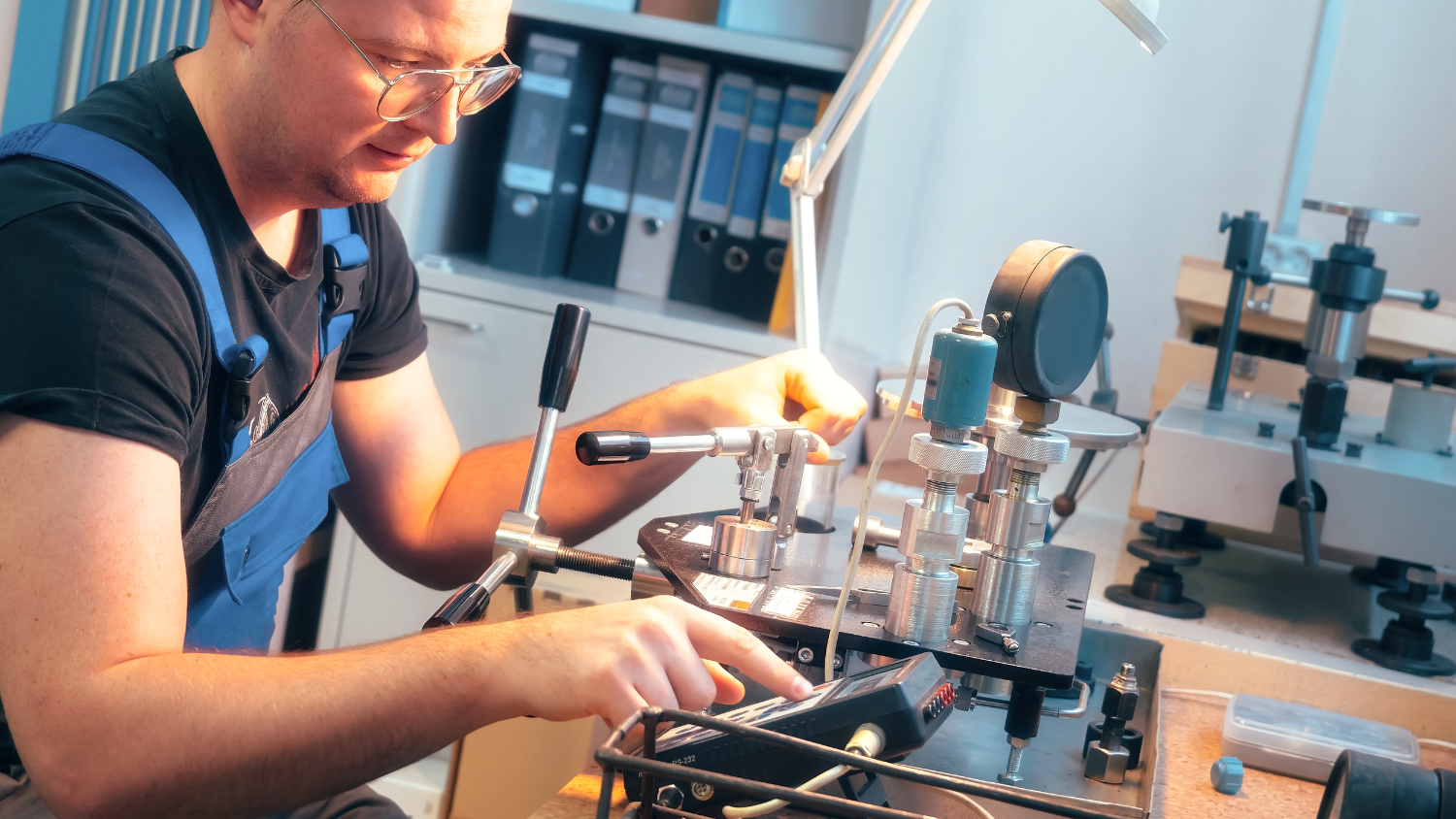
Using the right terms for better metrology practices
Adopting the right technical terminology is never a trivial matter, especially in a field as demanding as metrology. The choice of words reflects not only the precision of the instruments we use, but also the rigor with which we approach our measurement methods. Abandoning the Anglicism “calibrator” in favor of accurate terms such as “standard device,” “calibration source,” or “working standard” helps to establish a consistent technical language that is understood by everyone—whether engineers, technicians, quality managers, or auditors.
Chevrier Instruments, your benchmark for measuring instruments
At Chevrier Instruments, this linguistic precision is part of a broader approach: offering our customers reliable tools, clear procedures, and professional support based on industry best practices. Because precise vocabulary leads to more effective communication, more accurate interventions, and ultimately, better quality measurements.
In a context where standards are evolving and compliance requirements are becoming more stringent, using the right terms becomes a real advantage. It facilitates the understanding of technical documentation, ensures continuity in calibration practices, and enhances the credibility of companies that choose to comply. By clarifying the language, we also clarify the work—and that is precisely what enables us to build robust and sustainable metrology processes.
Ultimately, using the appropriate terminology is not just a matter of language: it is a way of affirming a culture of precision, professionalism, and quality. It is also a way of valuing the work of specialists who, day after day, rely on reliable instruments to ensure measurement accuracy in sectors where every detail counts.